New device to monitor water quality
Low-cost multi-sensors that are portable and easy to use will help protect vulnerable communities in Colombia from contaminated water.


An international partnership between the Universidad de los Andes and the University of Bathhas led to the development of a low-cost multi-sensor device that this portable and easy to use to detect heavy metals and to measure the physicochemical parameters of water.
The ‘Water Monitoring in Vulnerable Communities in Colombia in a Post-Conflict Environment’project, which was financed by Newton Fund Institutional Links, has developed an integrated detection sensor to analyze waterthat can be easily used by non-experts.
The device simply and in real time provides a way of testing water, and it can also upload the results to a website through a mobile application.
The online resource stores the information and visualizes the location of the sample on a map; the data is in the public domain and can be accessed anytime from anywhere in the world.
It also measures four physiochemical variables in water: pH levels, conductivity, temperature, and dissolved oxygen. As such, it monitors the presence of heavy metals, including mercury, in the water.
Mercury has significantly contaminated water and river sediments including parts of the Amazon River. The contamination accumulates in the food chain, mainly in the fish eaten by local communities, but also in fruit and vegetables through the irrigation system.
During the dry season, in many places, the river is the main water source. A large number of rural municipalities and Indigenous areas of Colombia are currently affected by this type of contamination, and there are many mercury-related illnesses that produce deformities of the fetus and brain disorders. The number of cases continues to increase every year.
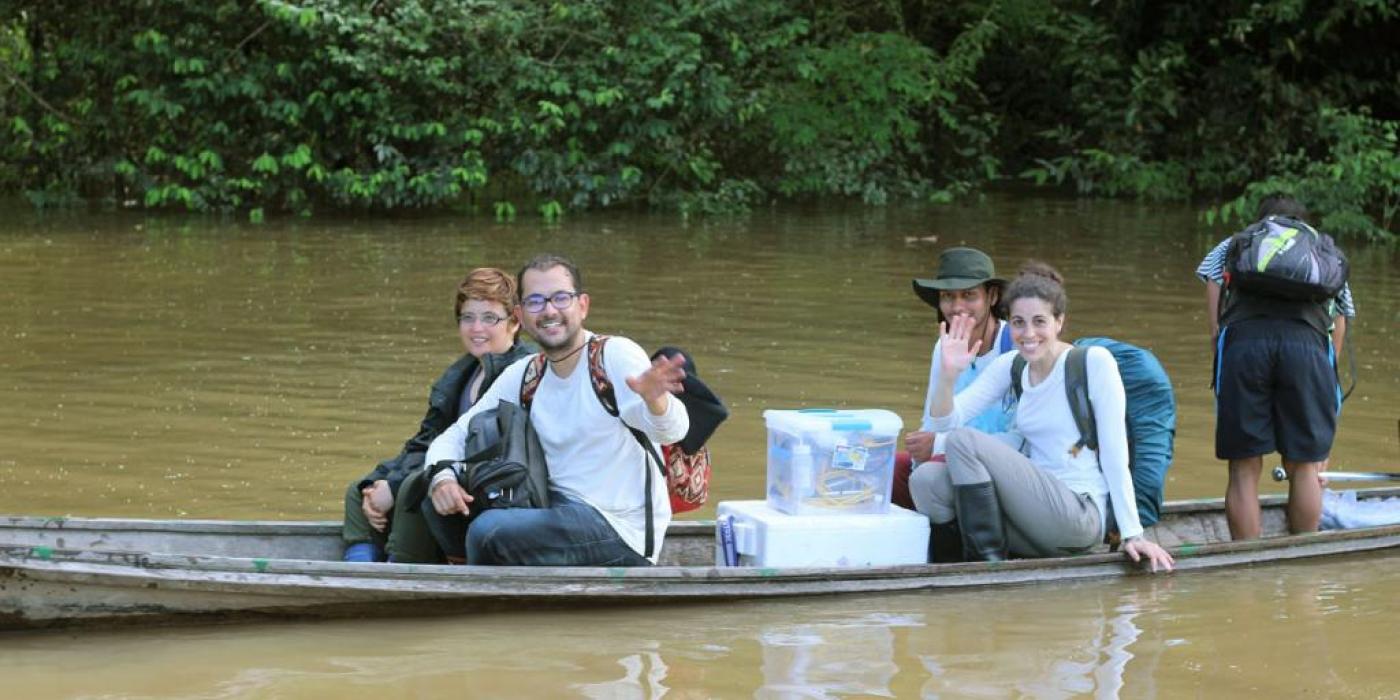
The Santa Sofía Indigenous reservation, which is located in the extreme south of the Colombian Amazon, tested the multi-sensor device.
The research team spent almost three weeks in the Amazon testing the device to be sure that it was easy to use and met the community's needs.
The leader of the project, Dr. Mirella Di Lorenzo, who is a full professor in the Department of Chemical Engineering at the University of Bath said, "Because of the lack of financial resources and technology, communities such as the Santa Sofía in the Amazon do not have a way of checking if the water around them is safe to use. This multi-sensor device has the potential to have a large impact on these communities, allowing them to easily test if the water is safe to use".
The researchers hope that by mapping areas of water that are affected by mercury and by providing users with important information about the condition of their water sources, they will help to prevent the spread of waterborne diseases.
Her vision is that the communities have the means to test the quality of the water supply themselves while the authorities provide evidence of the water that is affected by illegal mining, which allows them to take action and mitigate this activity.
Dr. Alba Graciela Ávila Bernal, associate professor at the Universidad de los Andes and co-researcher of the project commented that, "Humans have contaminated many regions around the world, and it is particularly embarrassing that we have contaminated the Amazon. Having combined our experience in participatory design and humanitarian engineering with the University of Bath's experience in developing sensors, we have provided this community with a trustworthy and cheap solution to test the water that they depend upon".
This multi-disciplinary and multicultural project has brought researchers together from the Faculty of Economics and the Faculty of Engineering from the University of los Andes with researchers from the Water Innovation and Research Centre (WIRC@Bath) and the Centre for Sustainable Chemical Technologies (CSCT) at the University of Bath (United Kingdom). They have all combined their experience to benefit a vulnerable community in one of Colombia's remotest areas: the Amazon.
It is hoped that this device has the potential to change the lives of communities, that it can be made on a large scale, and that the data gathered can be used by local leaders and by those in charge of creating public policies.
Research team from the Universidad de los Andes
- Dr. Alba Ávila, associate professor in the Department of Electrical and Electronic Engineering. Co-researcher of the project.
- Dr. Juan Camilo Cárdenas, dean of the Faculty of Economics.
- Dr. Felipe Muñoz, professor in the Department of Chemical Engineering.
- Dr. Johana Husserl, professor in the Department of Civil and Environmental Engineering.
- Dr. Jaime Pérez, post-doctoral researcher in the Faculty of Engineering.
- Sebastián Arévalo, M.E. research assistant in the Department of Electrical and Electronic Engineering.
Research team from the University of Bath
- Dr. Mirella Di Lorenzo, project leader and senior lecturer in the Department of Chemical Engineering.
- Dr. Jannis Wenk, professor in the in the Department of Chemical Engineering.
- Dr. Pedro Estrela, full professor in the Department of Electrical and Electronic Engineering.
- Dr. Elena Bernalte Morgado, post-doctoral research associate.